Peripheral arterial disease sneaks up on people. A little calf tightness on hills, a sore on a toe that lingers, toes that feel colder than they used to. Then one day a patient tells me he plans errands around where he can sit and rub the ache out of his legs. That slow narrowing of arteries, driven by atherosclerosis, is exactly why a peripheral vascular surgeon exists. Our work spans prevention, diagnosis, minimally invasive repair, open reconstruction, wound care, and long-term surveillance. We do not just operate, we steward circulation.
What a vascular surgeon actually does
A vascular surgeon is a physician trained to treat diseases of arteries, veins, and lymphatics throughout the body except the heart and brain. The title sometimes misleads. We are not only surgeons. A vascular and endovascular surgeon or endovascular surgeon manages conditions with medication and supervised exercise, deploys stents and balloons through needle sticks, and performs complex open reconstructions when those approaches are not enough. We are the blood vessel doctors people seek when they type “vascular surgeon near me” after a primary care doctor notices diminished pulses or a wound that won’t heal.
Within the field, some colleagues lean toward venous disease and function as a vein specialist or vein surgeon for varicose veins, spider veins, and chronic venous insufficiency. Others focus on arterial disease and limb salvage, acting as a PAD doctor or peripheral artery disease doctor. Many of us do both. The connective thread is judgment: choosing the right treatment at the right time for the right patient.
PVD vs PAD, cleared up
Peripheral vascular disease is an umbrella term that includes arterial and venous disorders in the limbs. In common usage, PVD often implies arterial problems. Strictly speaking:
- PAD is reduced arterial blood flow to the limbs, usually from atherosclerosis. It presents as claudication, rest pain, tissue loss, and can progress to critical limb ischemia. Venous disease refers to conditions such as varicose veins, deep vein thrombosis, and chronic venous insufficiency that affect return flow toward the heart. Symptoms include leg swelling, heaviness, skin changes, and ulcers around the ankles.
A peripheral vascular surgeon treats both ends of that spectrum. In my clinic, a morning might start with a claudication specialist visit for a walker-dependent patient with calf pain, shift to a DVT specialist consultation for a new blood clot behind the knee, and finish with a wound care vascular visit for a nonhealing ulcer in a person with diabetes.
How we diagnose: not just a pulse check
Diagnosis begins with a story. Distance walked before pain, the relief with rest, nighttime foot pain that eases when dangling the leg off the bed, skin color changes. Then hands on skin, feeling for pulses from groin to foot, examining capillary refill, hair loss, skin temperature, and the balance of swelling.
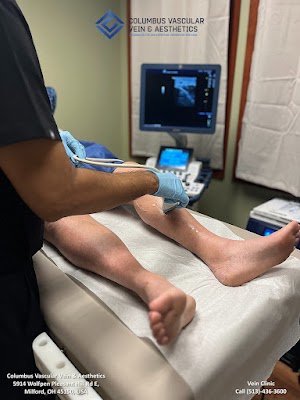
Objective data follows. The ankle-brachial index, a simple ratio of ankle to arm blood pressure, is the best screening test for PAD. Values below 0.9 suggest arterial disease. People with diabetes can have calcified, noncompressible arteries that falsely elevate the ABI, so we often measure toe pressures as well. A vascular ultrasound specialist or Doppler specialist in vascular imaging maps blood flow and pinpoints stenoses. Duplex ultrasound is our workhorse across arterial and venous disease. It tells us velocity, direction, and the nature of a blockage without contrast dye or radiation.
For intervention planning, cross-sectional imaging matters. CT angiography provides a road map from the aorta to the pedal arch. MR angiography is an option if kidney function limits contrast exposure. When we intend to treat during the same session, catheter-based angiography remains the gold standard. An interventional vascular surgeon or vascular radiologist can diagnose and treat in one procedure, threading a wire through a tight segment, performing angioplasty, then placing a stent if recoil or dissection occurs.
Venous disease uses a similar approach, tuned to reflux and obstruction. A venous insufficiency doctor relies on reflux studies performed standing to assess valve failure. An iliac vein compression such as May Thurner syndrome requires a high index of suspicion and often intravascular ultrasound to confirm. DVT evaluation balances ultrasound findings with the patient’s risk of pulmonary embolism and bleeding.
Risk, lifestyle, and medical therapy as first-line tools
Before balloons and blades, we treat the biology. Atherosclerosis grows over decades. Lowering risk arrests its march. The most important lever is smoking cessation. Nothing else we do has as much impact on limb outcomes. Patients who stop smoking cut their risk of graft failure, amputation, and recurrent interventions dramatically. That is not a scold, it is the clearest path to saving legs.
Blood pressure and diabetes must be controlled tightly. I favor a systolic target under 130 if tolerated, and an A1c near or below 7 percent for most, individualized for frailty. High-intensity statin therapy is standard for PAD. Statins do more than lower LDL, they stabilize plaques and reduce inflammation. Antiplatelet therapy, typically aspirin or clopidogrel, reduces cardiovascular events. For selected symptomatic patients walking limited distances, cilostazol can improve pain-free walking time, although contraindicated in heart failure.
Supervised exercise therapy works. A structured program, three sessions weekly for at least 12 vascular surgeon near Milford weeks, improves walking distance more than a stent in many claudicants, and the benefits last. The key is adherence. It is hard to sell the slog of gradual improvement when a same-day procedure looks easy, but for the right patients the trade-off favors shoes and sweat.
Venous disease responds to elevation, compression stockings fitted to the calf and ankle, calf strengthening, and weight management. For those with chronic venous insufficiency, consistent compression can shrink ulcers faster than any ablation if arterial inflow is intact.
When procedures make sense
Deciding to intervene is a matter of goals. For claudication that limits lifestyle despite optimal medical therapy and supervised exercise, angioplasty and stent placement can restore function. For critical limb ischemia with rest pain or tissue loss, revascularization is limb-saving. For venous disease, thermal ablation or sclerotherapy relieves symptoms and reduces recurrent ulcers after compression fails.
Endovascular work satisfies when a few millimeters of plaque separate a patient from a normal walk. We access through a needle in the femoral or radial artery, steer a wire across the blockage, inflate a balloon, and, if necessary, deploy a stent. Drug-coated balloons and stents can reduce restenosis in femoropopliteal segments. In the iliac arteries, stents hold shape and stay open for years with excellent patency. In the below-knee vessels, balloon angioplasty without stenting is common, aiming to restore straight-line flow to the foot.
Open surgery still matters. When long-segment disease resists balloons and stents, a bypass using the patient’s own saphenous vein from groin to below-knee popliteal artery delivers durable patency. In experienced hands, a leg bypass surgeon can provide a decade of symptom relief. The trade-off is a longer recovery and wound risk. In my practice, the threshold for open bypass drops in young patients with a long life ahead or in those who have failed multiple endovascular attempts.
Carotid disease sits beside limb work but illustrates the same calculus. A carotid artery surgeon chooses between carotid endarterectomy, which removes plaque through a neck incision, and carotid stenting in patients at high surgical risk. The best approach depends on anatomy, comorbidity, and local expertise. Endarterectomy remains the standard in many symptomatic patients with low operative risk and suitable anatomy.
Aneurysm care also belongs here. An aneurysm specialist or aortic aneurysm surgeon treats a dilated aorta before rupture. Endovascular aneurysm repair, through groin punctures, places a stent graft inside the aneurysm to exclude it from circulation. Not every anatomy fits. Those with short necks or tortuous iliac arteries may still need open repair. Again, judgment over dogma.
Venous disease beyond varicose veins
Varicose veins are not just cosmetic. They ache, throb, and itch. Skin can darken and harden with hemosiderin deposition, eventually breaking down into ulcers near the medial ankle. A vein doctor or varicose vein specialist first confirms reflux in the saphenous system by ultrasound. Treatments include endovenous thermal ablation with radiofrequency or laser performed under local anesthesia, microphlebectomy through tiny punctures, and sclerotherapy injections for spider veins and smaller varicosities. A laser vein treatment doctor or vein ablation specialist must always ensure that deep veins are patent and that the arterial pulse is adequate before closing superficial pathways.
Deep vein thrombosis carries different stakes. A blood clot in the leg can travel to the lungs. A blood clot doctor manages anticoagulation and, in selected cases, catheter-directed thrombolysis or mechanical thrombectomy with a clot removal specialist when swelling threatens limb function or when iliofemoral DVT occurs in otherwise healthy patients. The same prudence applies to inferior vena cava filter use, limited to those who cannot receive anticoagulation, with prompt retrieval when safe.
Pelvic congestion syndrome, May Thurner syndrome, and nutcracker syndrome are vascular compression problems that masquerade as pain syndromes. A pelvic congestion syndrome specialist recognizes pelvic varices and treats them by embolizing refluxing ovarian or internal iliac veins. A May Thurner syndrome specialist stents the compressed left iliac vein to relieve outflow obstruction. A nutcracker syndrome specialist weighs the risks and benefits of stenting versus surgical transposition of the left renal vein, wary of long-term stent migration.
Lymphedema sits at the edge of vascular practice. A lymphedema specialist in the vascular realm focuses on diagnosis, compression, decongestive therapy, and surveillance, collaborating with therapists. Surgical lymphatic bypass or node transfer remains a niche.
Limb salvage and amputation prevention, where it all comes together
Critical limb ischemia concentrates the challenges of vascular care. The skin breaks down at the edges of perfusion. The foot becomes a test of micro and macro circulation. A limb salvage specialist coordinates debridement, revascularization, infection control, and offloading. The goal is not just a healed wound, it is a foot that can walk.
Diabetes complicates everything. A diabetic vascular specialist knows that the pedal arch is often the bottleneck. In the angio suite, we search for a target artery that feeds the wound’s angiosome, whether the dorsalis pedis for a dorsal ulcer or the posterior tibial for a plantar lesion. Sometimes a series of below-the-ankle angioplasties, one vessel at a time, turns a bluish toe pink before your eyes. Antibiotics do their part, but without flow, they cannot reach the battlefield.
Not every toe can be saved. The line between heroics and harm is thin. An amputation prevention doctor recognizes when a limited toe or transmetatarsal amputation after revascularization gives the best chance of a functional limb, versus knee-level amputation in a frail patient who has no target vessels and would endure months of painful, futile care. That is a hard conversation, but it respects dignity and outcomes.
Special situations that demand a vascular specialist
Some conditions show up rarely but require a circulation specialist who has seen them before.
- Acute limb ischemia. A sudden cold, painful, pulseless limb is an emergency. An acute limb ischemia specialist moves quickly with anticoagulation, catheter-directed lysis, or open thrombectomy. Hours matter. The difference between a viable leg and irreversible muscle death is often measured by how quickly the artery is reopened and compartment pressures are addressed. Thoracic outlet syndrome. Not every arm with tingling needs decompression. A thoracic outlet syndrome specialist separates neurogenic from venous and arterial forms. Effort thrombosis in the subclavian vein after a gym session looks different from posture-related hand numbness. First rib resection and venolysis can cure selected cases, while many do well with physical therapy. Mesenteric and renal artery disease. A mesenteric ischemia specialist recognizes abdominal pain that worsens with eating and weight loss out of proportion to GI findings, then restores flow to the superior mesenteric artery with stenting or bypass. A renal artery stenosis specialist treats blood pressure driven by renovascular disease only when there is flash pulmonary edema, declining kidney function from bilateral disease, or truly refractory hypertension. Many incidental renal artery narrowings are better observed than stented.
Vascular access and the unsung plumbing
Dialysis keeps patients alive, and vascular access is their lifeline. A dialysis access surgeon creates arteriovenous fistulas or grafts, ideally an autogenous forearm fistula that matures over weeks into a reliable conduit. An AV fistula surgeon troubleshoots stenoses with angioplasty, salvages thrombosed accesses with thrombectomy, and revises aneurysmal segments. The work is meticulous and ongoing, the success shared with dialysis nurses and access coordinators who monitor flows and thrill changes.
Trauma and iatrogenic injuries also occupy a vascular access surgeon. A bleeding groin after a catheterization, a pseudoaneurysm at an access site, or an arterial line complication can often be handled with ultrasound-guided thrombin injection or a covered stent, sparing open repair.
Imaging and surveillance as a long game
Vascular disease is not cured, it is managed. After an intervention, a vascular ultrasound specialist monitors patency. A bypass that narrows can be rescued if caught early. Stents develop intimal hyperplasia that responds to angioplasty. A carotid endarterectomy or stent needs periodic duplex exams to detect restenosis. The cadence varies, but six weeks, six months, then yearly is a common rhythm, adjusted by findings.
For venous ablation, follow-up ultrasound ensures closure and rules out DVT. For aneurysm repair, CT or ultrasound surveils the sac for endoleaks and size changes. Adherence to surveillance separates good programs from those that only celebrate the day-of procedure.
Choosing the right vascular specialist
People search “find vascular surgeon” or “best vascular surgeon” when symptoms escalate. Credentials matter, but so does fit. Look for a board certified vascular surgeon who treats both with open and endovascular techniques, or a vascular medicine specialist who coordinates nonoperative care when appropriate. Ask how often the practice handles your specific problem, whether they have dedicated vascular ultrasound on site, and how they approach surveillance. A vascular interventionist who is too quick with stents or a vascular treatment specialist who refuses to consider surgery both risk bias. Balanced judgment is the sign you have found an experienced vascular surgeon.
For venous concerns, a varicose vein surgeon should perform a full duplex reflux study before recommending ablation and should discuss compression and lifestyle changes. For PAD, an arterial disease specialist should talk about walking programs, statins, and smoking cessation before scheduling an angiogram, unless there is limb threat.
What a first visit looks like
A good first visit is unhurried. We sit down and map your symptoms to your activities. We review risk factors: smoking history, diabetes control, cholesterol trends, family history of aneurysm. We examine the skin and pulses, measure ABI or toe pressures in the office, and order duplex ultrasound if needed. If there is limb threat, we move swiftly to imaging and revascularization. If there is lifestyle-limiting claudication, we lay out a plan that starts with supervised exercise and medical therapy. If venous disease dominates, we measure, fit compression, and plan ablation only if symptoms persist.
One of my patients, a retired mechanic, arrived adamant he needed a stent. He could walk only two blocks before calf pain stopped him. His ABI was 0.68, not terrible, and his CT showed a moderate narrowing in the superficial femoral artery. We agreed to 12 weeks of supervised exercise and smoking cessation with nicotine replacement. He returned six inches taller, proud of walking a mile without stopping. His arteries were a little more open, but more important, his muscles had learned to work with what they had. That is not the right story for everyone, but it is the right first chapter for many.
Tools of the trade, chosen thoughtfully
The menu of interventions looks long, but almost all of it distills to a few categories:

- Angioplasty and stenting. The bread and butter of an angioplasty specialist in vascular practice. Balloons open, stents scaffold. Drug-coated technology helps in selected arteries. Durability depends on lesion length, vessel location, and patient behavior, especially smoking. Endarterectomy and bypass. An endarterectomy surgeon removes plaque directly in arteries like the carotid or common femoral. A bypass surgery vascular approach reroutes flow around long blockages. A vascular bypass surgeon leans on autogenous vein whenever possible for long-term patency, reserving prosthetic material for specific sites like the above-knee popliteal target. Ablation and sclerotherapy. A sclerotherapy specialist treats superficial veins with injections that scar them closed. Thermal ablation seals refluxing trunks with controlled heat. A laser vein treatment doctor or vein ablation specialist should counsel about rare complications like nerve irritation or DVT. Thrombectomy and lysis. A thrombectomy specialist uses catheters to remove clots in arteries or veins, often combined with thrombolytic drugs. Speed is the ally, bleeding risk the constraint. Patient selection is crucial.
Those tools work only as well as the plan that guides them. A vascular imaging specialist helps build that plan with precise duplex and cross-sectional studies. A vascular pain specialist can help separate neuropathic leg pain from vascular claudication. Collaboration with podiatry, endocrinology, infectious disease, and wound care teams strengthens outcomes.
The realities behind outcomes
Numbers tell part of the story. In the femoropopliteal segment, primary patency after balloon angioplasty alone often falls below 60 percent at one year for long lesions. Stents improve that, but restenosis still occurs. Bypass with good vein can reach 70 to 80 percent primary patency at five years in the above-knee position, a little lower below the knee. For aortoiliac disease, stenting can exceed 80 to 90 percent primary patency at three to five years. The carotid endarterectomy perioperative stroke and death rate should sit under 3 percent for asymptomatic and under 6 percent for symptomatic patients in competent hands.
These are ranges because patients are not statistics. A meticulous technique and a committed patient change the curve. So does a pack of cigarettes, uncontrolled glucose, or missed follow-up. Honest counseling lays out what we can control and what we cannot.
When to seek a circulation doctor promptly
A few red flags warrant urgent evaluation by a circulation specialist or leg circulation doctor:
- Foot pain at rest that improves when you dangle your leg off the bed or sleep in a chair. A new wound on the foot or toes that does not shrink within two weeks. Sudden leg pain with a cold, pale, numb foot. Leg swelling with calf tenderness and sudden size difference compared to the other side. Recurrent passing out or mini-strokes with a known carotid stenosis.
Timeliness saves tissue and lives. It also increases the chance that treatment can be minimally invasive.
The long view: living with vascular disease
After the procedure, after the wound heals, the work continues. A vascular health specialist stays in your corner. Walking becomes a habit, not a prescription. Medications become routine, not a chore. A compression stocking becomes part of getting dressed. Surveillance visits become checkpoints, not burdens. The aim is stability: a life where vascular disease is managed in the background while you get on with the foreground.
If you are looking for a vascular surgery specialist, think beyond the nearest address. “Top vascular surgeon” lists are less useful than a conversation that leaves you confident the plan fits your goals. Whether you need a carotid surgeon, an aneurysm surgeon, an artery specialist for PAD, a leg vein specialist for venous disease, or a vascular access surgeon for dialysis, the right fit is a clinician who listens, measures twice, and treats once.
What we bring to the table is experience across the spectrum, a toolkit that spans medication to microincisions to major reconstruction, and a bias toward preserving function. We see the vessel, but we never forget the person attached to it.